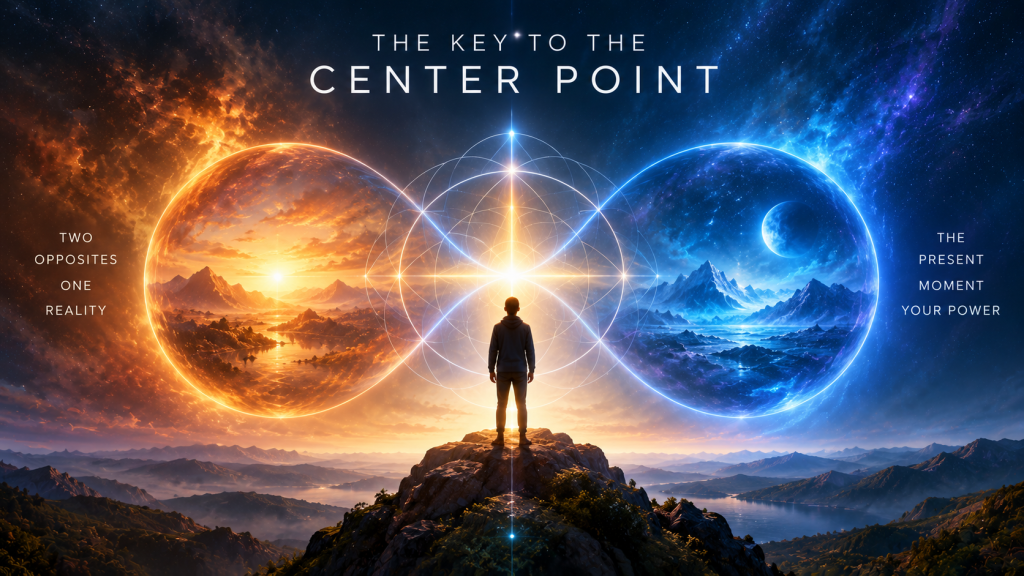
The key to the center point
We usually treat a paradox as a puzzle, a pair of ideas that contradict each other and can’t both be true. In reality, a paradox is something else: a point of high awareness. A paradox appears when you stand at the center of what look like two opposing polarities, perspectives, or opposites.
The center point of power
A paradox is what it feels like to stand on that balance point. When two apparent opposites face you and you stay in the middle, you are in the present moment, “the now,” which is described as your true point of power. The tension you feel is simply the sign that you are standing in the right place.
Most of us deal with opposing views by choosing a side, and the other side then has to be wrong. A paradox works differently. Neither side invalidates the other, and a deeper center point reveals that both fit together into a single, unified understanding.
Five Paradoxes of Physical Life
Here are some examples:
1. Doing less to create more
When you learn to do more with less, you empower yourself to do less in order to accomplish or create more. Effort and effectiveness are not the same thing. Working from alignment, rather than force, produces more with less strain.
2. Receiving what you need
What you truly need is attracted to you effortlessly once you stop needing it in a desperate or needy way. Desperation signals lack, and reality reflects that signal back. Relaxing the grip leaves room for what you need to arrive.
3. Changing what you reflect
An outer circumstance changes most effectively when you no longer care or insist that it changes. This is not indifference. It means you have stopped making your inner state depend on an outside condition. Once your state is no longer conditional on that circumstance, the reflection is free to shift.
4. Being your true self
When you are completely okay with not being your true self 100% of the time, you are, ironically, being your true self 100% of the time. Total self-acceptance is itself the true self. Striving to be authentic is a trap, while accepting where you are is authenticity.
5. Unconditional love
Creation loves and supports you so unconditionally that it will even unconditionally support your freedom to believe that you are unworthy or unloved. On this view, creation’s love never forces itself on you or demands that you believe in it. It respects your freedom to the point of letting you doubt it.
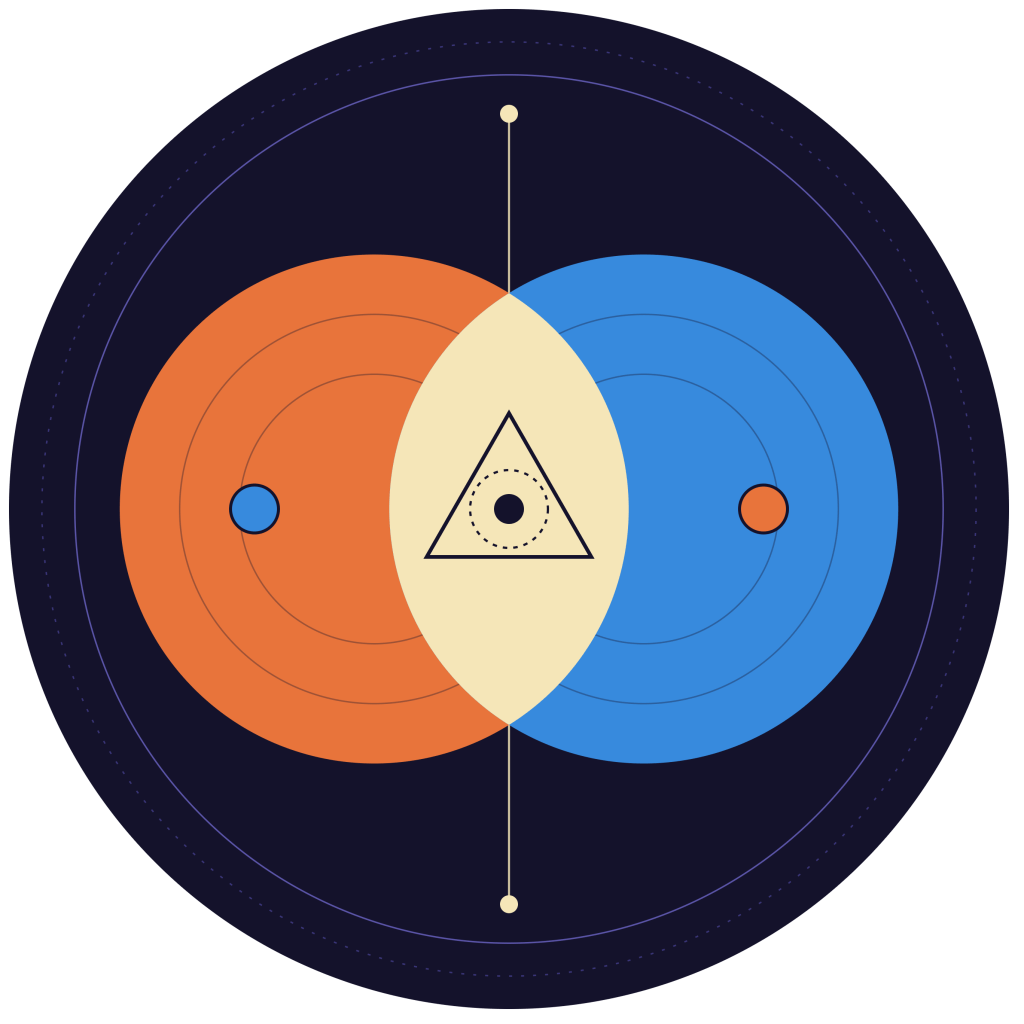
How to Use a Paradox
All five examples share a pattern. Each has two sides that seem to cancel each other out, and each resolves when you stop pushing toward one side and rest in the center.
Next time you feel torn between two opposing positions, you could try the following:
- Notice that you are in the middle, and that this is the present moment.
- Stop trying to prove one side right and the other wrong.
- Ask what larger understanding could hold both.


Leave a comment