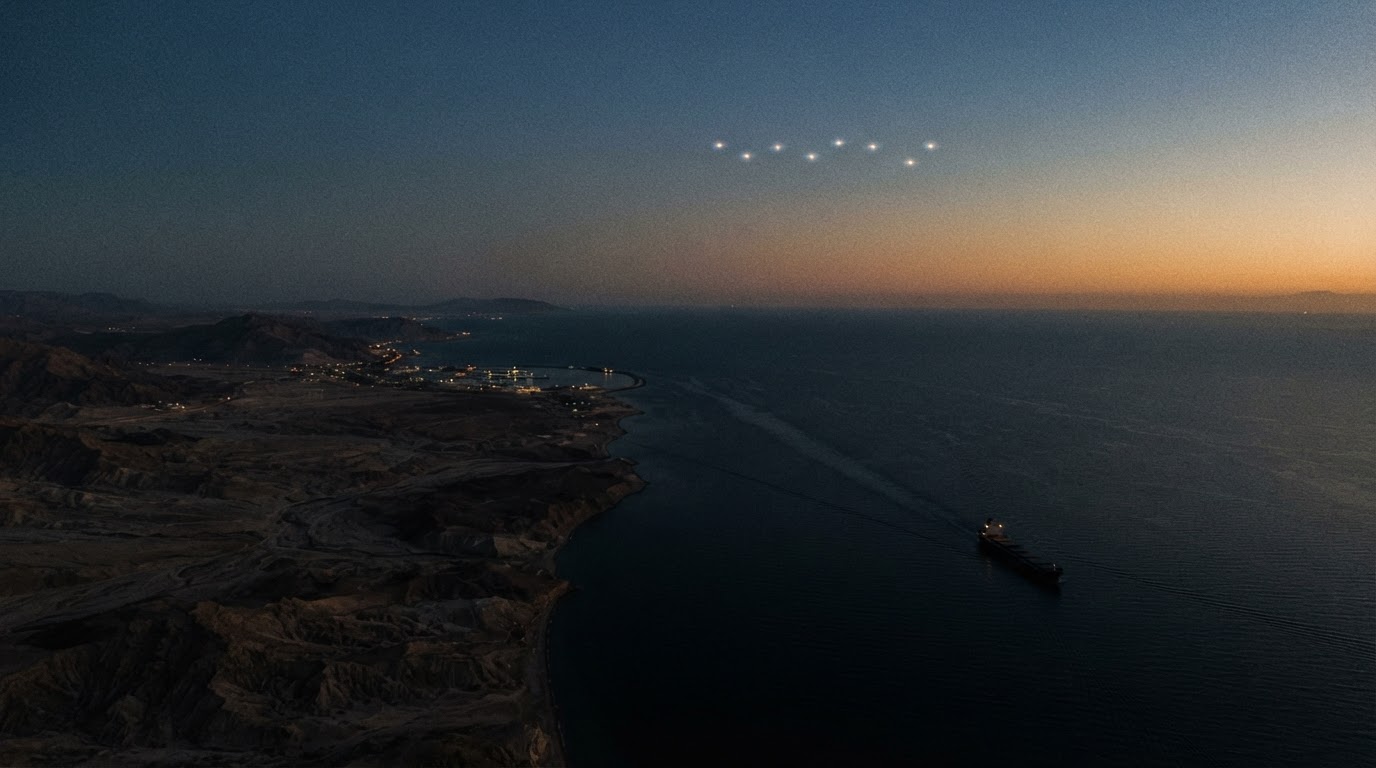
One week after the first Disclosure Watch, the archive has grown again. On Friday, 20 November 2026, the US Department of War published the eighth release of declassified and historical files on unidentified anomalous phenomena (UAP) under PURSUE, the Presidential Unsealing and Reporting System for UAP Encounters. This issue looks at what the new batch contains, from fresh military footage filmed this year to records written when the modern UFO era was only a few years old.
The eighth release: three videos and around forty documents
The new batch adds three military videos and around forty documents, several of them from the 1950s, to the public archive at war.gov/UFO. The Department’s chief spokesman, Sean Parnell, announced it in an official release, stating that the Department and its partner agencies are already working on the next batch and will keep publishing files on a rolling basis.
According to the Department, redactions in these files protect eyewitness identities, the locations of government facilities and sensitive military information unrelated to UAP. The materials are presented as unresolved cases: events the government has not been able to explain.
New footage from the Middle East
All three videos were recorded by sensors on US military platforms in the Middle East and submitted by US Central Command to the All-domain Anomaly Resolution Office (AARO), the Pentagon office that investigates UAP.
- 2020, 20 seconds – infrared footage filmed near sea level, in which a contrasting object enters from the right edge of the frame and crosses from right to left, near what appears to be a large ship.
- 2023, 13 seconds – electro-optical and infrared footage capturing an area of contrast, catalogued as DOW-UAP-PR169 (watch it on the Department’s official video archive).
- 2026, 54 seconds – the longest and most recent clip, catalogued as DOW-UAP-PR168. Filmed from above, the sensor pans to follow several objects moving mostly from right to left, changes magnification a number of times, zooms in on two of them and briefly loses track of them before finding them again.
A 1952 CIA briefing on “flying saucers”
Among the historical records is a briefing from the CIA’s Office of Scientific Intelligence dated 14 August 1952. It summarises a US Air Force investigation into flying saucer reports and considers their possible intelligence implications. The briefing cites around 1,500 reports in the United States, 250 of them from July 1952 alone, and notes that the Air Technical Intelligence Center at Wright-Patterson Air Force Base, the forerunner of today’s National Air and Space Intelligence Center, considered about 20 percent of them unexplained.
The document also recalls one of the founding sightings of the era: a pilot in Washington State who, in June 1947, reported nine discs flying in formation past Mount Rainier at an estimated 1,000 miles per hour.
Lockheed engineers watch the sky over California
Another newly digitised record, dated 20 January 1954, describes a sighting by staff of the Lockheed Aircraft Corporation on 16 December 1953. At around 5 p.m., Lockheed’s chief engineer Clarence L. Johnson, the aircraft designer behind some of the most advanced planes of his time, saw a dark, elliptical object from his ranch west of Agoura, California. It appeared to hang motionless for several minutes before moving west and disappearing. At about the same time, Lockheed flight-test personnel near Point Mugu reported a dark, stationary, wing-like object. The report includes a drawing that shows light blue flames at the rear of the object.

What this moment means
This release places two eras side by side. On one end is a 2026 sensor tracking several objects at once; on the other, engineers and intelligence analysts of the early 1950s taking careful notes on what they saw and could not explain. Seen together, they show a phenomenon that has been observed by trained, credible people for more than seventy years, and a public record that is finally catching up. Each new batch makes the subject a little more ordinary to talk about, and that steady normalisation is part of how a society prepares itself for open contact: calmly, with curiosity, and with the evidence in front of everyone.
Disclosure Watch will return with the next round of releases. To follow along and share your own reflections, join the community on the Network page.
Leave a Reply